Design leadership
User research
Product strategy
User interface design
UX design
9 minute read

Role:
Lead Product Designer, directed design vision, guided cross-team delivery
Timeline:
12 months
Bottom line up front
I led the design transformation of the Operational Decision Support Tool, from unusable proof of concept to operational readiness, achieving 35% reduction in planning cycle time and Royal Navy adoption. The NATO standard tool was bloated with untested features while missing critical functionality. Planners faced broken workflows, repeated data entry, and constant system switching.
We focused on Mission Analysis and Course of Action Development through field research with military planners and ruthless prioritisation. We validated early and often, grounding capabilities like power network simulation in actual operational scenarios rather than abstract demonstrations. Over one year, we achieved operational readiness for the Ministry of Defence, with faster and more effective planning cycles and adoption for military training and maritime operations.
PROBLEM
Modern warfare outpaces the planning tools meant to support it
Military commanders and their planning staff struggle to keep pace with modern warfare because their planning tools have not kept up with battlefield technology. Planners spend too much time working through doctrinal processes across disconnected systems instead of focusing on strategy and decision making.
When planning complex operations, staff need to establish situational awareness, analyse threats, co-ordinate forces, and develop multiple courses of action, but doing this across fragmented systems is slow and inefficient.
“Tens of thousands of people, vehicles and logistics are managed using Microsoft tools. Highly trained planners spend their time filling out spreadsheets instead of using their experience and judgment to make the best decisions.”
Challenge
Realigning the tool around the people who actually use it
approach
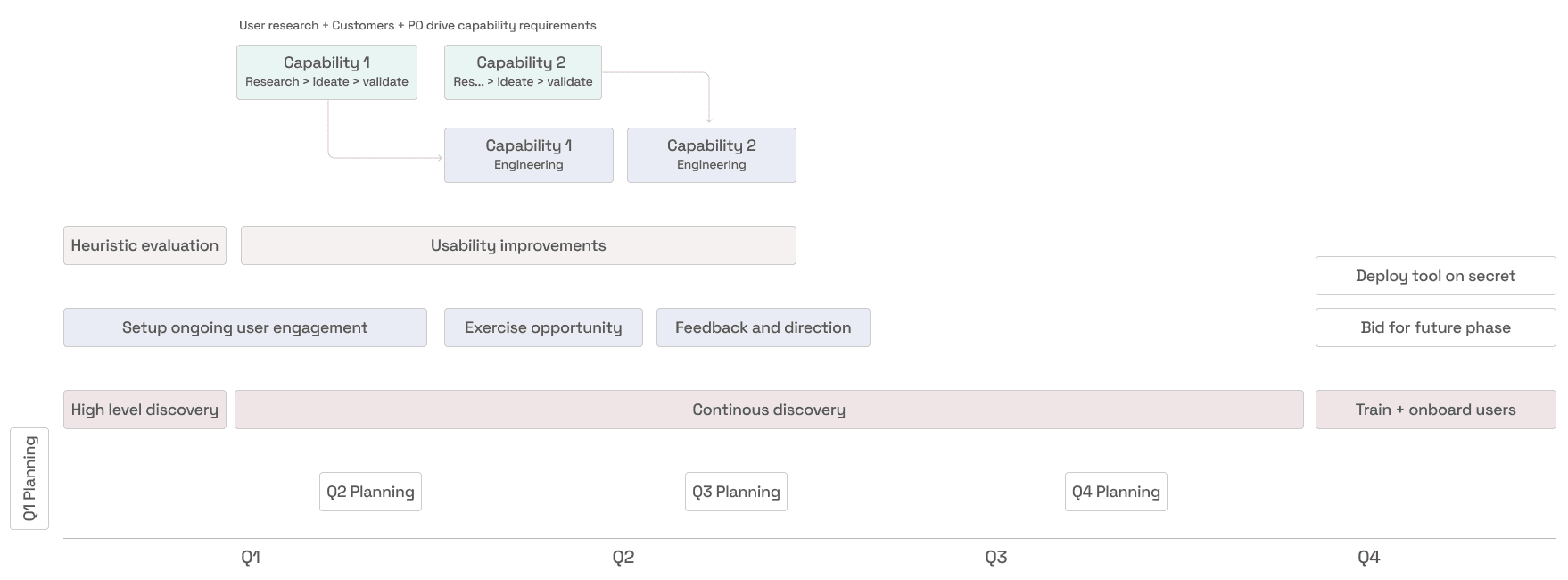
Build what users need, not everything the customers ask for
DISCOVERY
Building domain understanding through continuous discovery
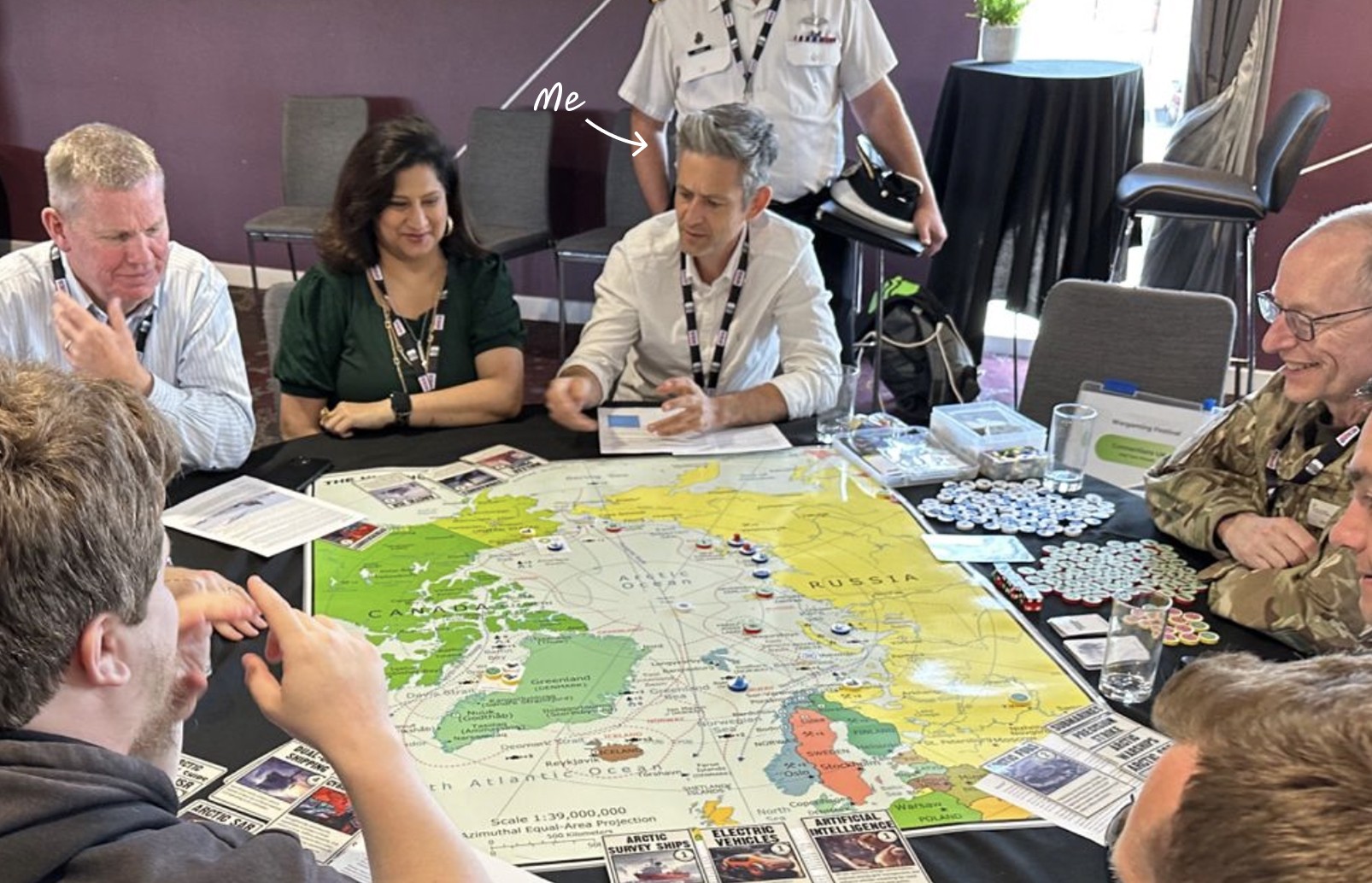
DSET 2023, Wargaming conference
Established a continuous discovery practice, training PMs and engineers to participate in user research, which increased team empathy
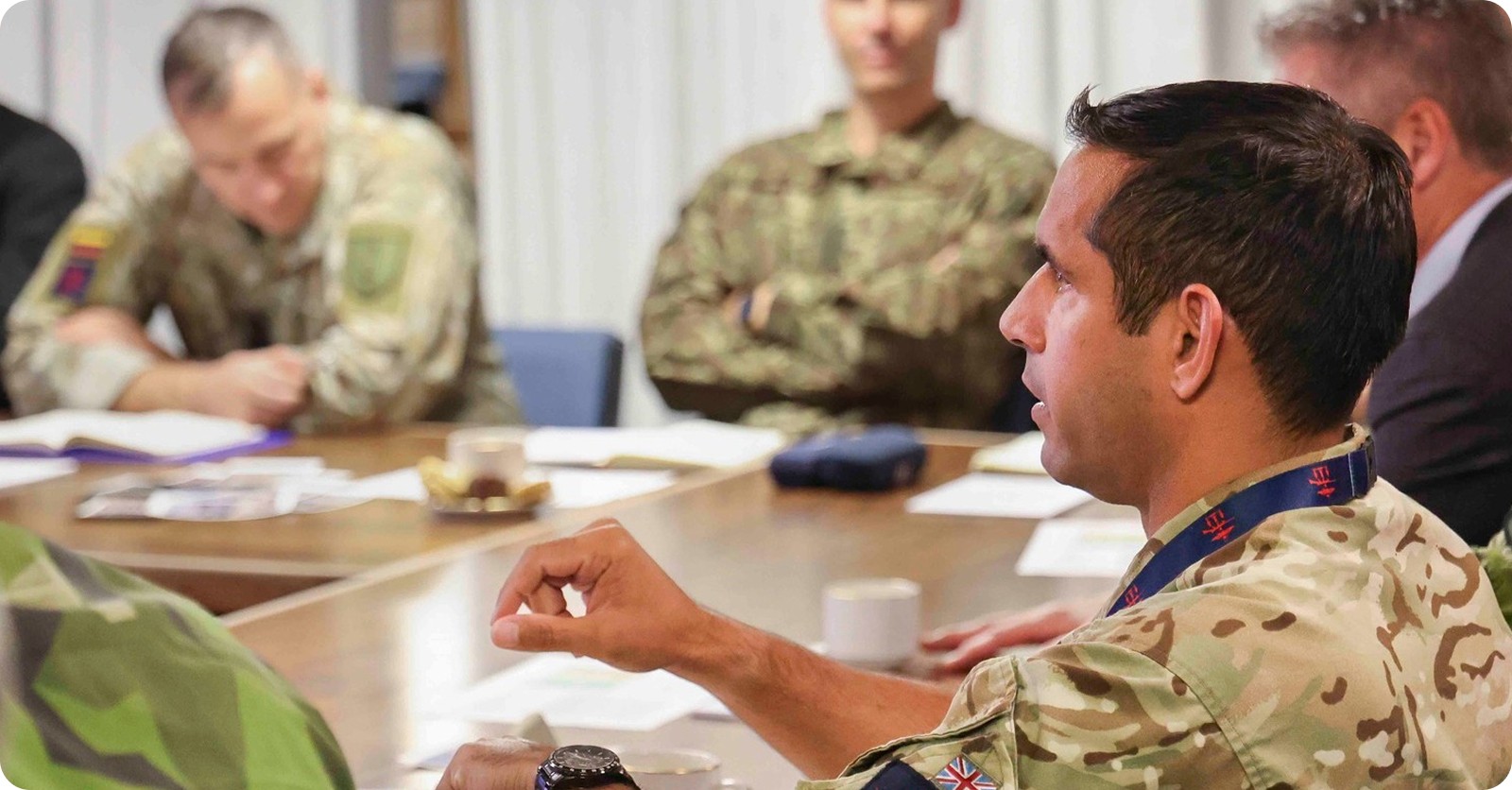
Set up weekly sessions with our subject matter expert, Lieutenant Colonel (Planner with 40+ years’ experience)
Mapped findings and workflows in a collaborative Miro board
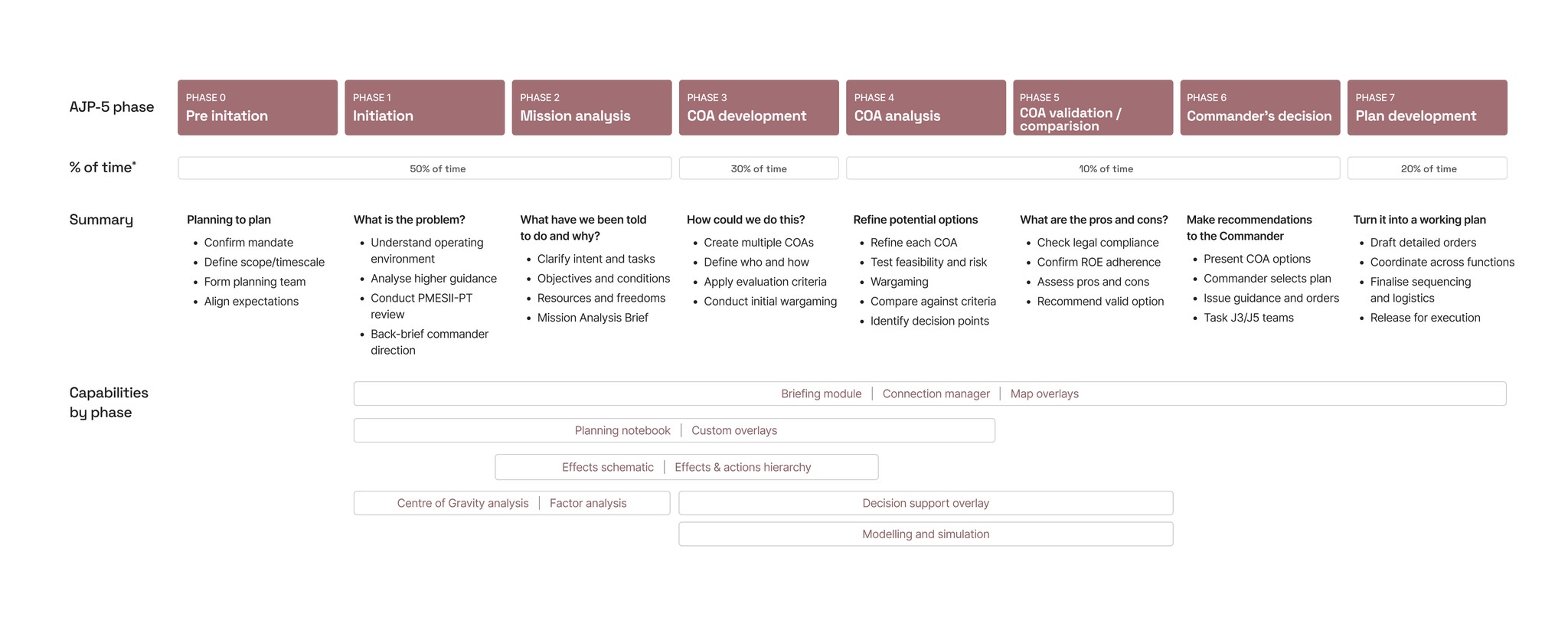

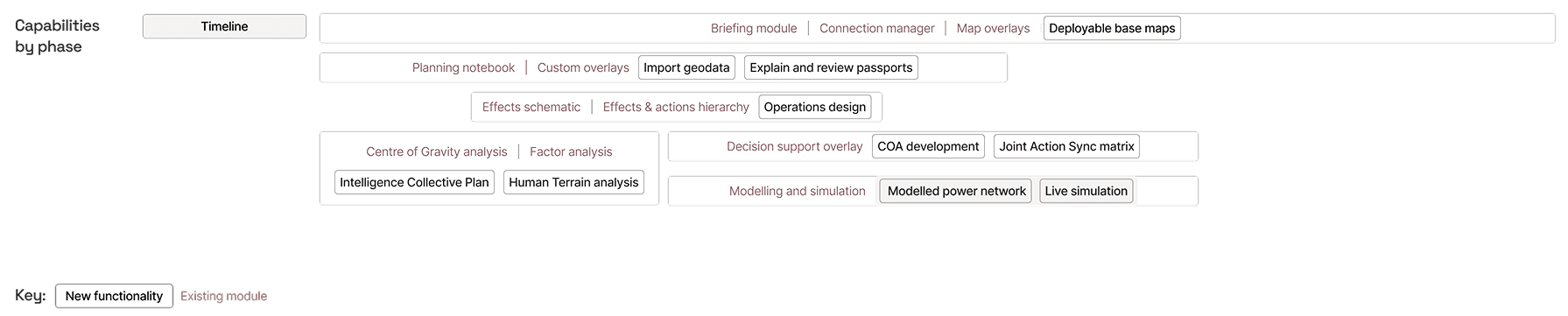
INSIGHTS
Understanding the users and the domain
Operational planning is both a science and an art, blending data, doctrine, and human judgement. Planners must balance analytical rigour with intuition, experience, and leadership to frame problems and develop creative, effective solutions.
Environment:
Integrated headquarters
Can be forward deployed
Air-gapped and classified environments
Critical insight from exercise testing:
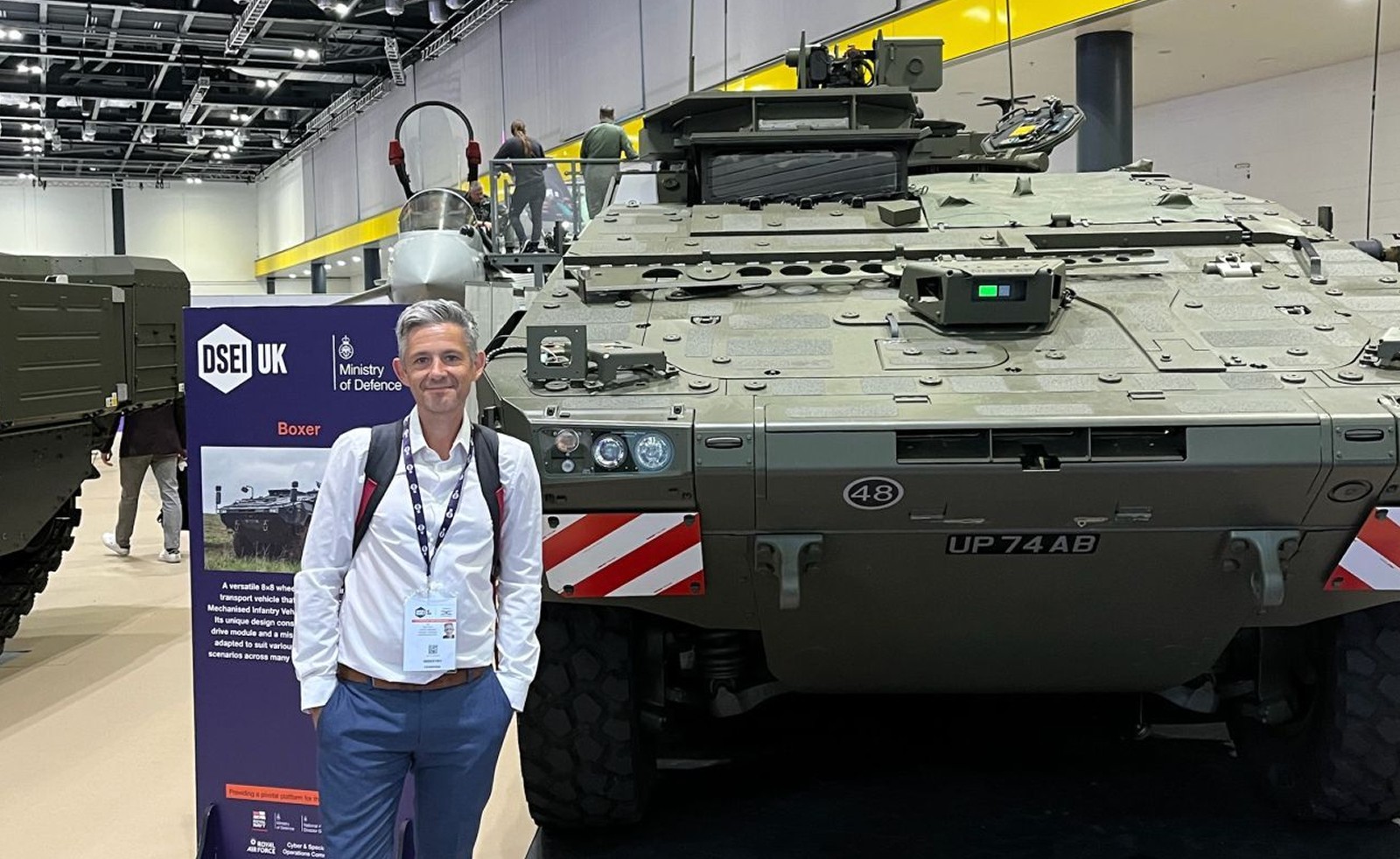
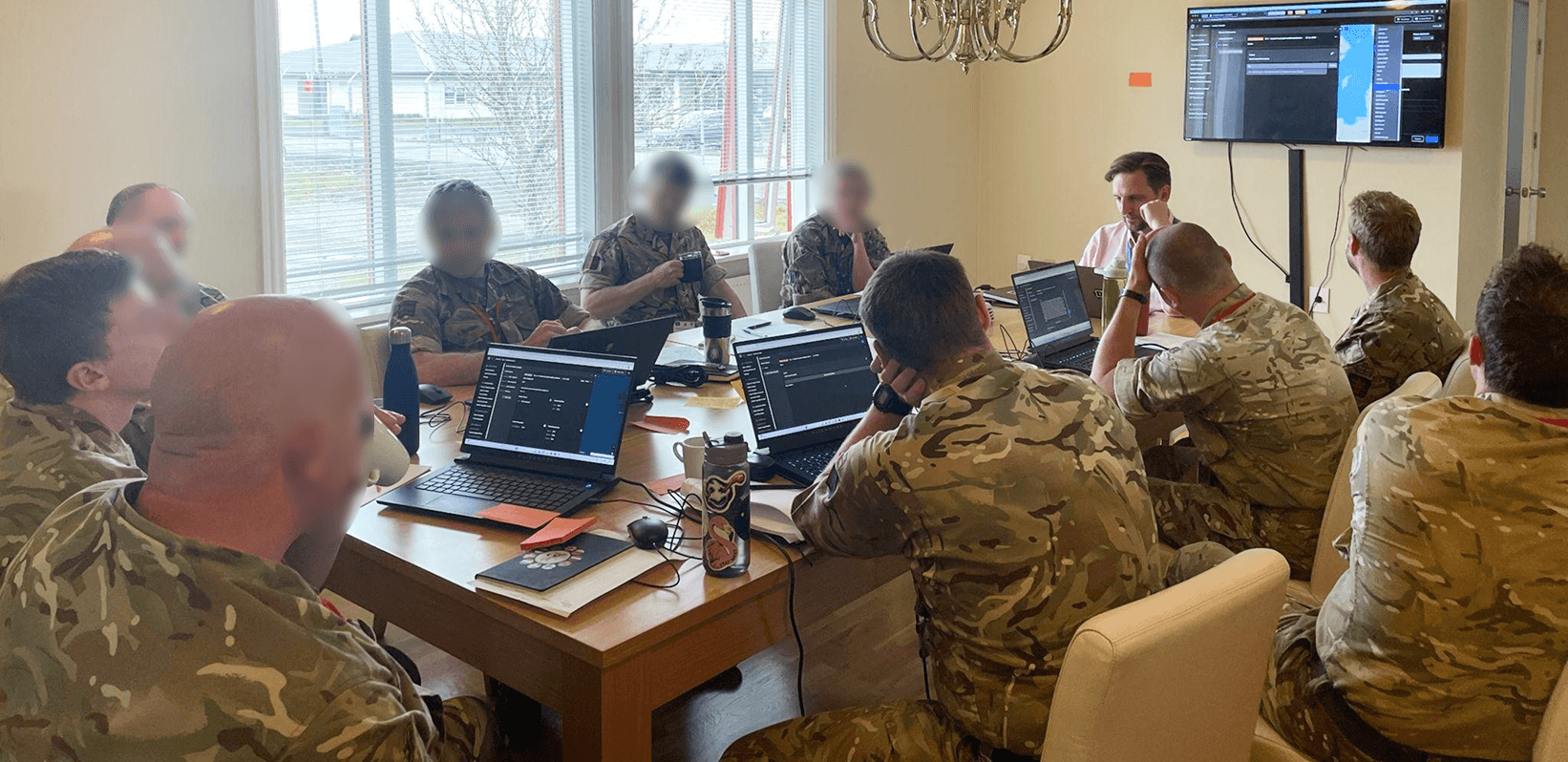
I joined a forward-deployed exercise to observe how military personnel used the OpDST in a live planning environment. The tool supported early planning stages but broke down in later phases. When faced with complex analysis and plan development, users reverted to traditional methods, post-it notes and whiteboards.
Planners saw real potential in modelling and simulation, but what they needed most was a reliable, intuitive workflow that reflected how they actually operate in a headquarters environment.
Explore the full case study to uncover all of the insights
Full case study
design
How we reduced simulation setup from minutes to seconds
Problem:
Planners needed to rapidly explore threat scenarios like "what if undersea cables are cut?" but the existing workflow took 5-10 minutes of complex configuration.
Solution:
Redesigned the experience from a rigid configuration flow to a live, interactive simulation. Users could click any power plant or transmission line on the map, toggle it on or off, and run simulations in under 5 seconds. A choropleth overlay revealed affected regions with clear visual feedback.
I facilitated cross-disciplinary workshops to align design, data science, and engineering on what "good enough" meant - prioritising speed and clarity over perfect accuracy to demonstrate the art of the possible.
“This is exactly the kind of capability we need to build on”
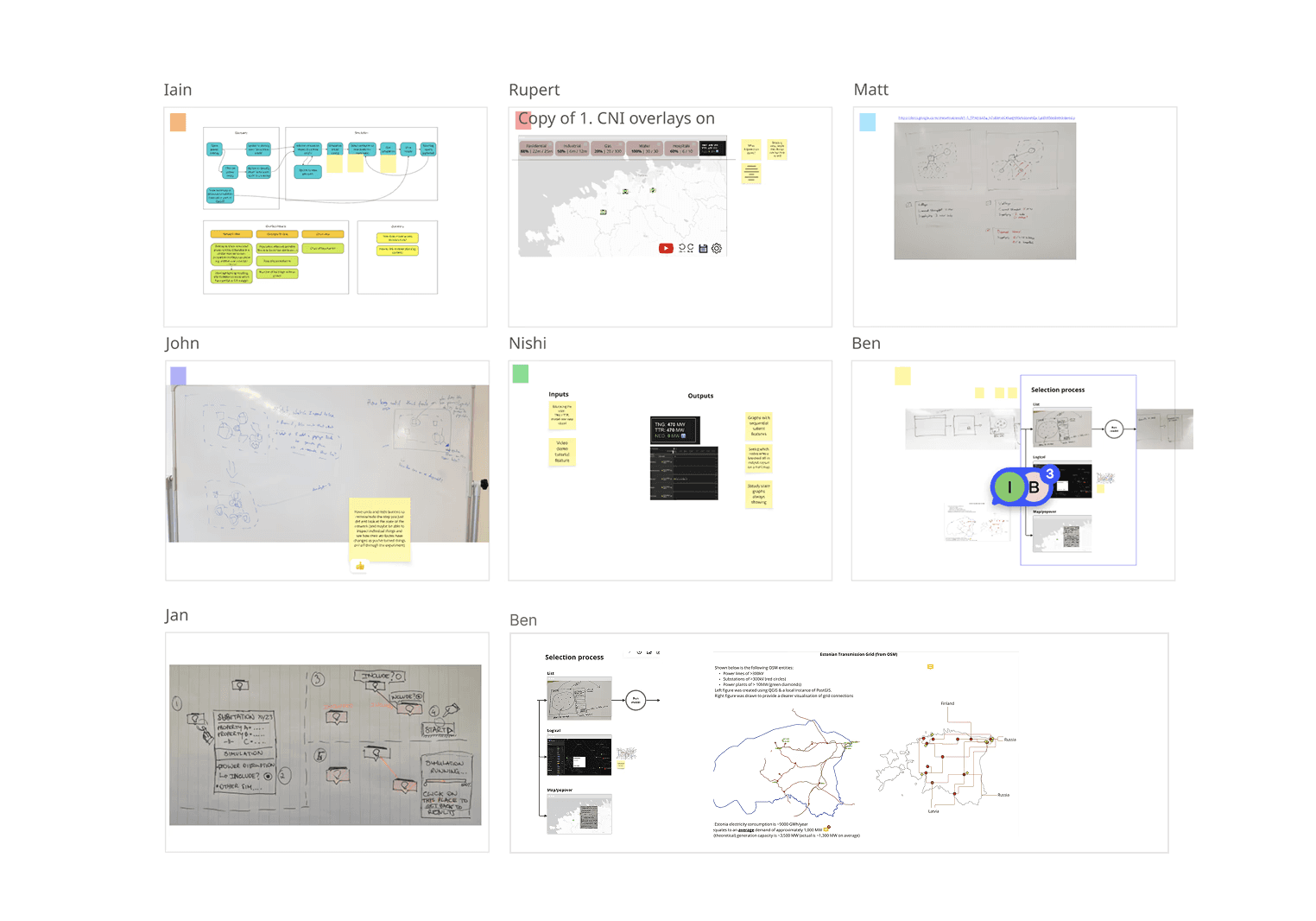
Exploring workflows for simulating power outages
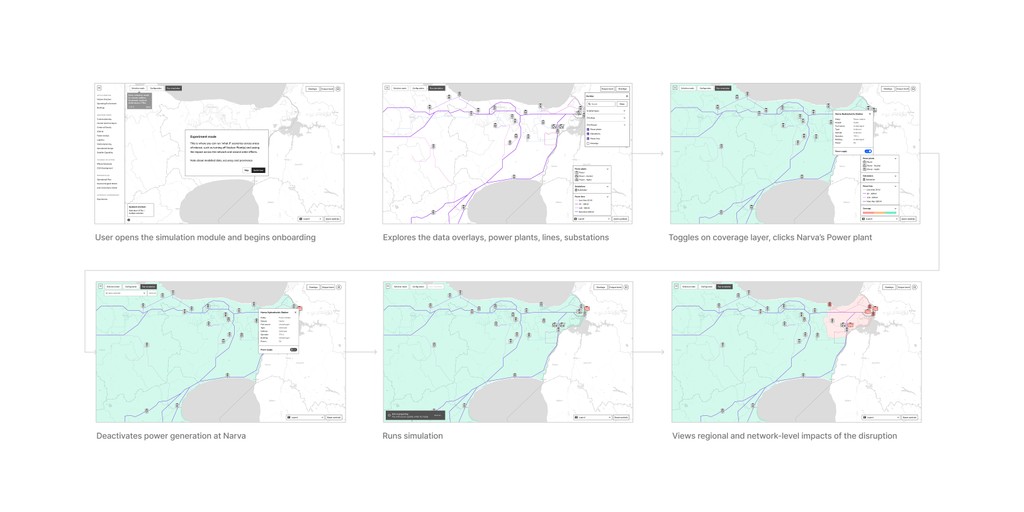
I mapped a quick low fidelity flow to bring together the workshop’s ideas and share a clear direction: enabling a user to disable a power plant and see how an outage affects the wider network. Data engineers confirmed simulations would complete in under ten seconds.
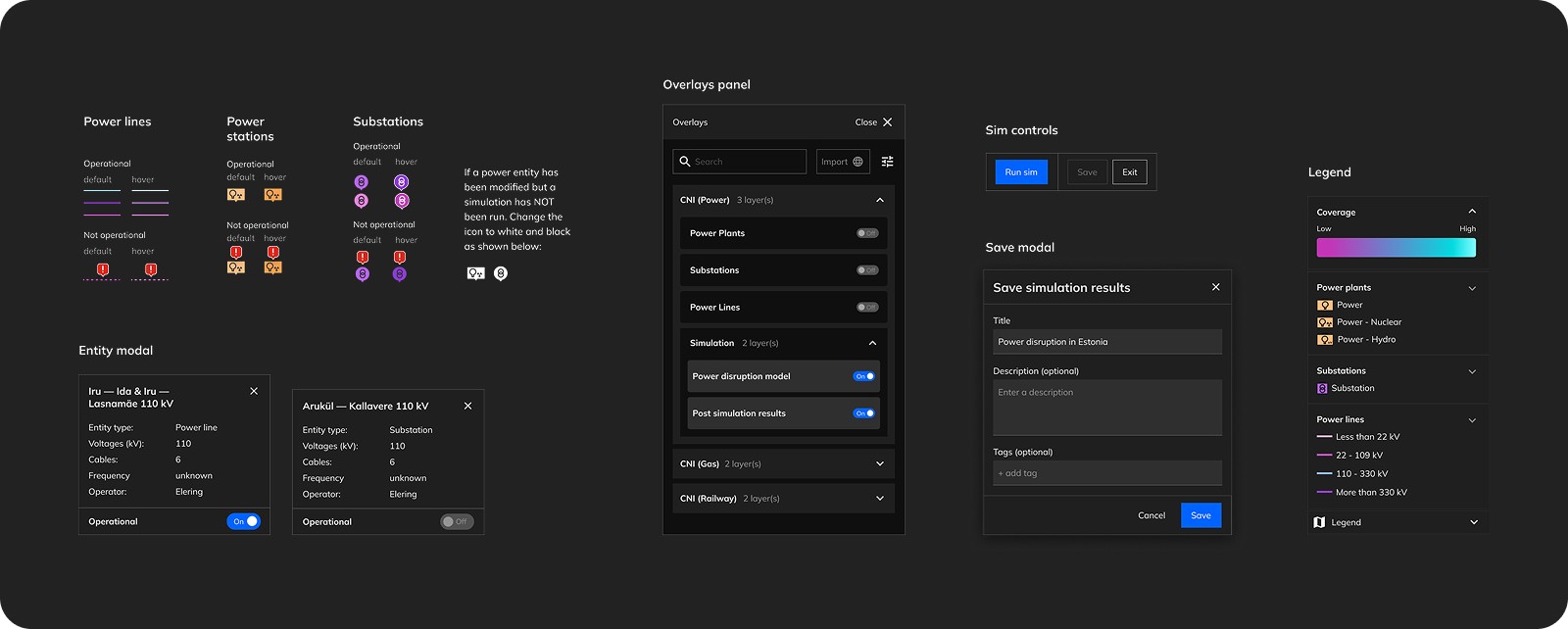
Power network UI and interactivity
Built with design system elements and bespoke components for clarity and accessibility
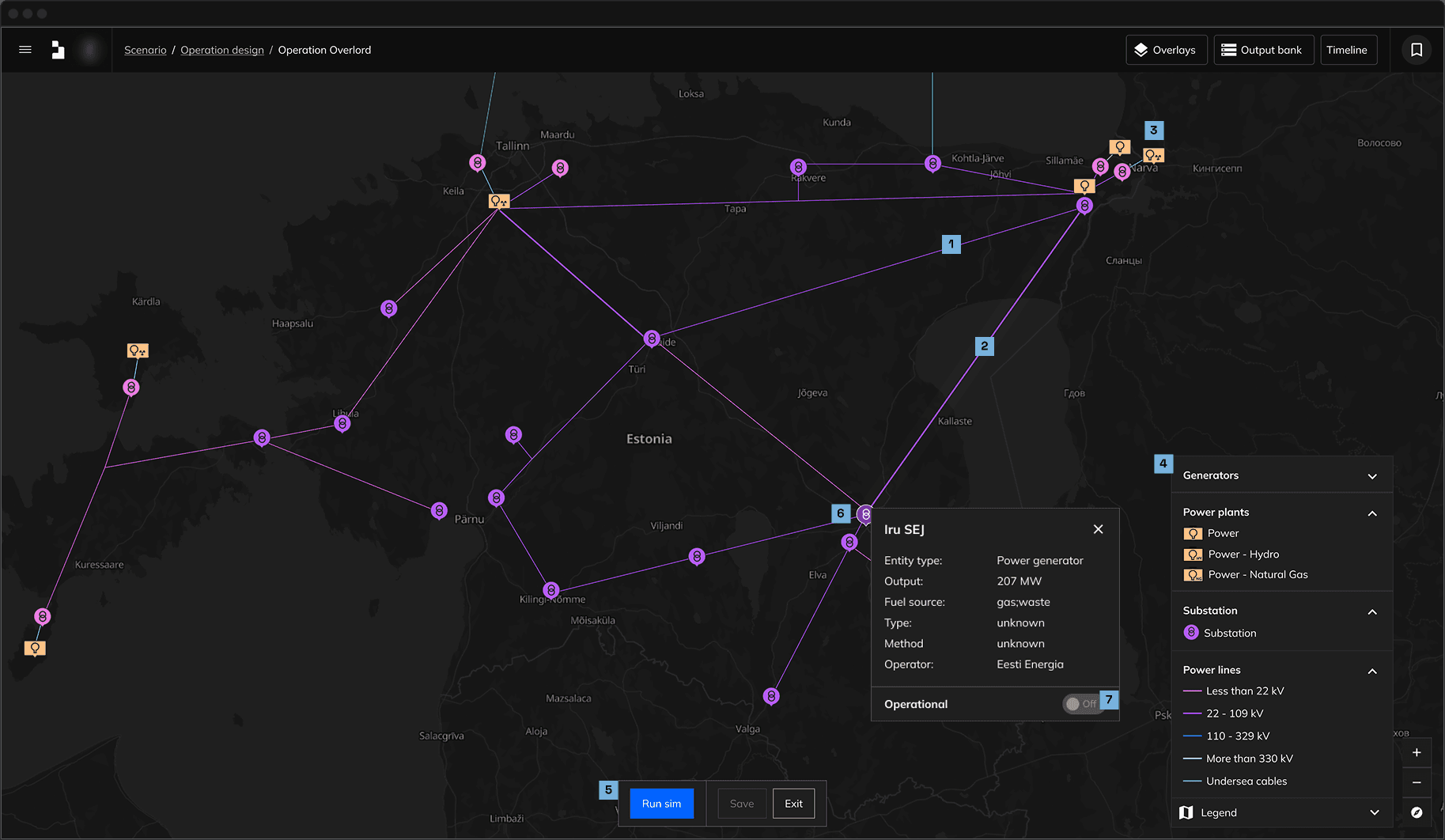
Visualising the power network
Created a clear, intuitive UI to help users easily understand and explore the power network
outcome
Early validation with a clear path forward
Next steps:
Enhance model fidelity through user research and SME input
Add a comparison analysis capability
Refine the UI and data presentation, introduce data tables
Option to view network edges logically or geographically
Click the video below to see the capability in action
OPERATIONAL DESIGN
Transforming an unusable planning tool into a usable capability
When I joined the project, a digital version of the Operational Design already existed, but it was not usable in practice. During the forward deployed exercise, planners had no choice but to revert to basic methods, using post-it notes and whiteboards.
What is an Operational Design?
An Operational Design is the conceptual phase of planning within AJP-5. It provides the doctrinal framework for understanding the situation, defining the desired end state, and identifying the ways and means to achieve it. It’s highly collaborative, often conducted on a whiteboard or wall in headquarters environments.
Why it matters
Operational Design underpins everything that follows in the planning process. It connects intent, objectives, effects, and tasks, ensuring that the plan is logically coherent and aligned with the commander’s vision.
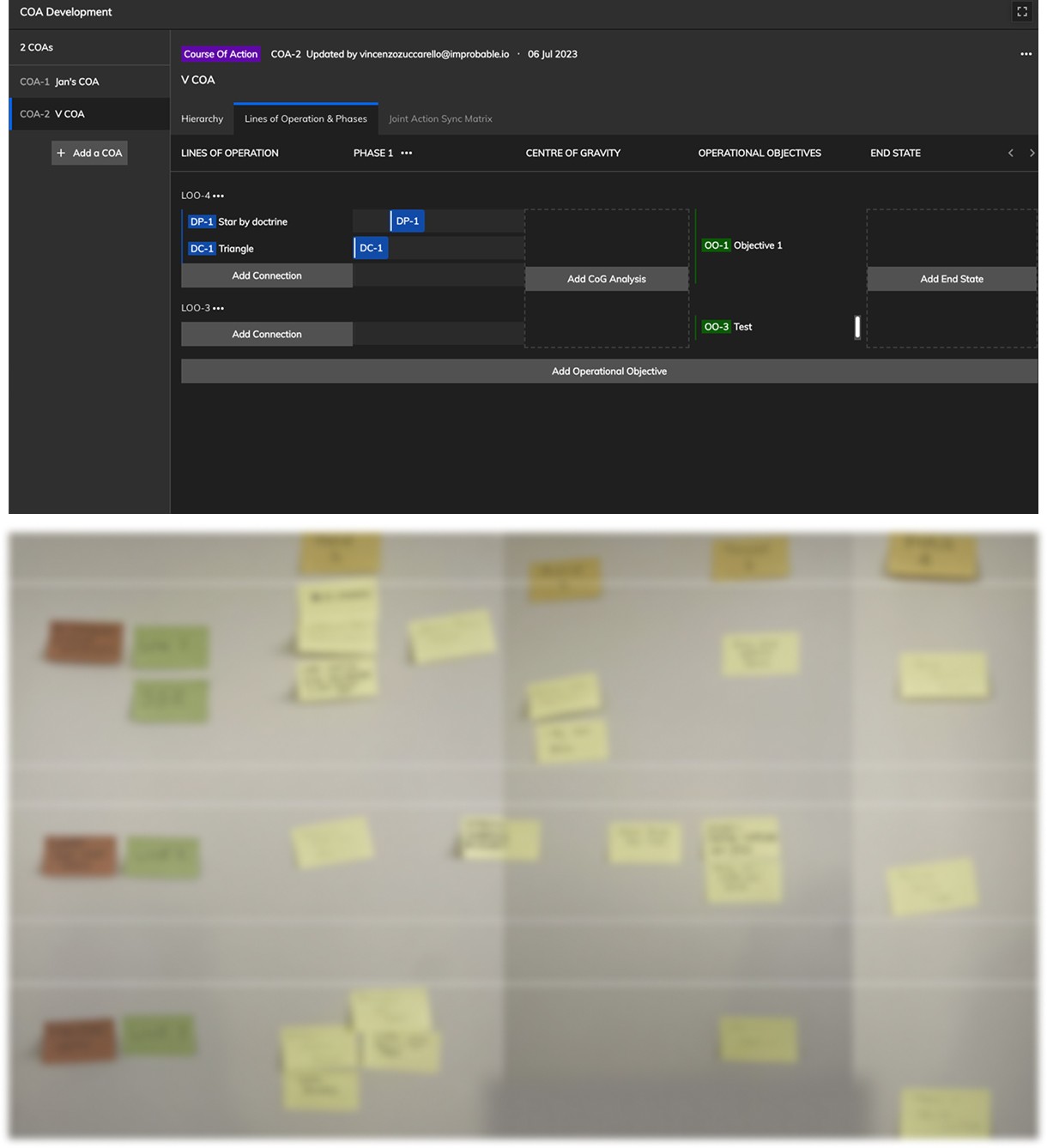
Top: 1st version of the Operational Design. Bottom: Post it notes from Planners on exercise.
Understanding how an Operational Design supports planners
We set out to understand how Operational designs are created, shared, and iterated so the tool could be designed around real user needs
Identified the core data structure and relationships between mission elements (lines of operations, end state, objectives, effects, activities, etc.)
We needed to give flexibility whilst building in enough helpful constraint to guide the users
Rapid, collaborative design to bring the concept to life
Analysed existing digital planning tools for inspiration (e.g., Miro, LucidCharts, FigJam)
Ideated collaboratively with engineers early to validate feasibility and complexity
Agreed to use a digital whiteboard approach using React Flow to visualise relationships dynamically
Designed low-fidelity wireframes to test structure and usability
Ran frequent feedback loops, design in the morning, working prototype by afternoon
Co-tested early builds with users and SME to capture immediate reactions
Balanced flexibility (creative freedom for planners) with constraint (guidance to ensure doctrinal consistency)
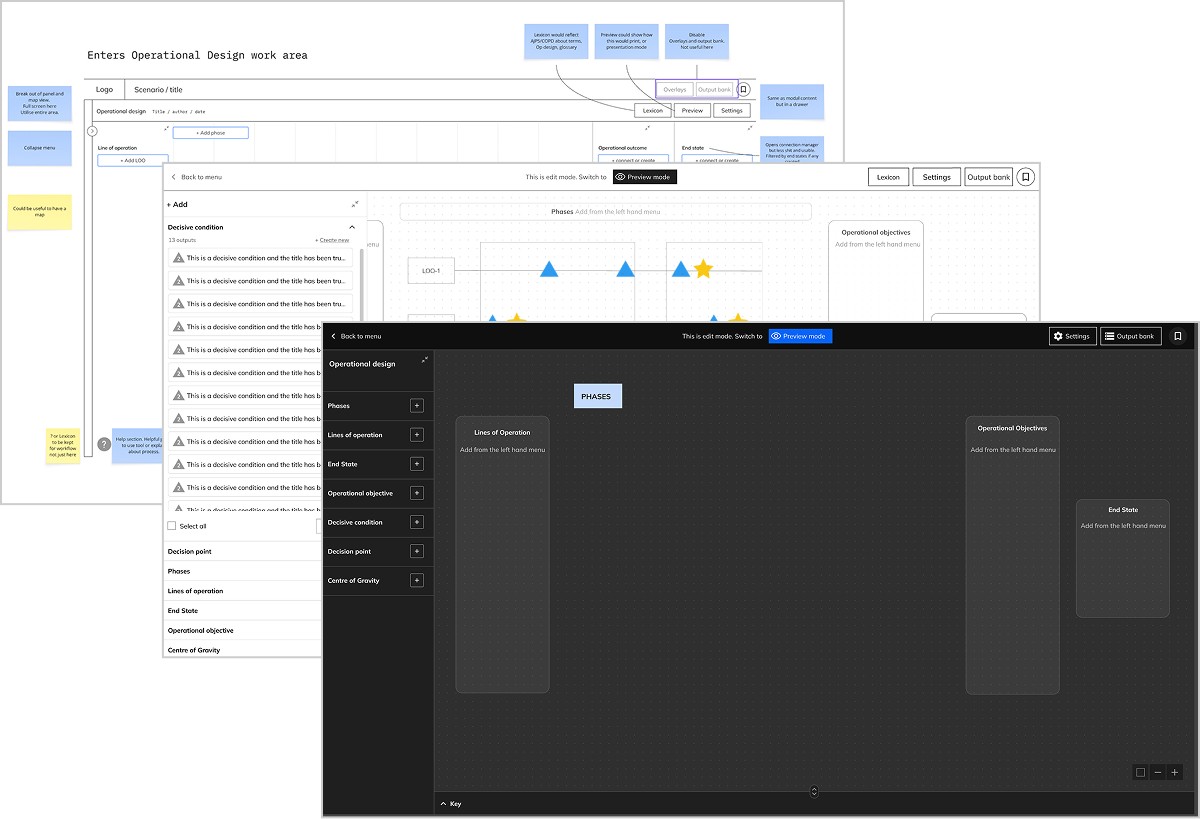
Progression from wireframe to high fidelity designs
Outcome
First iteration made planning faster and smarter
The final version was a high fidelity, interactive design that enabled planners to drag and drop elements to visually link them, showing cause and-effect relationships
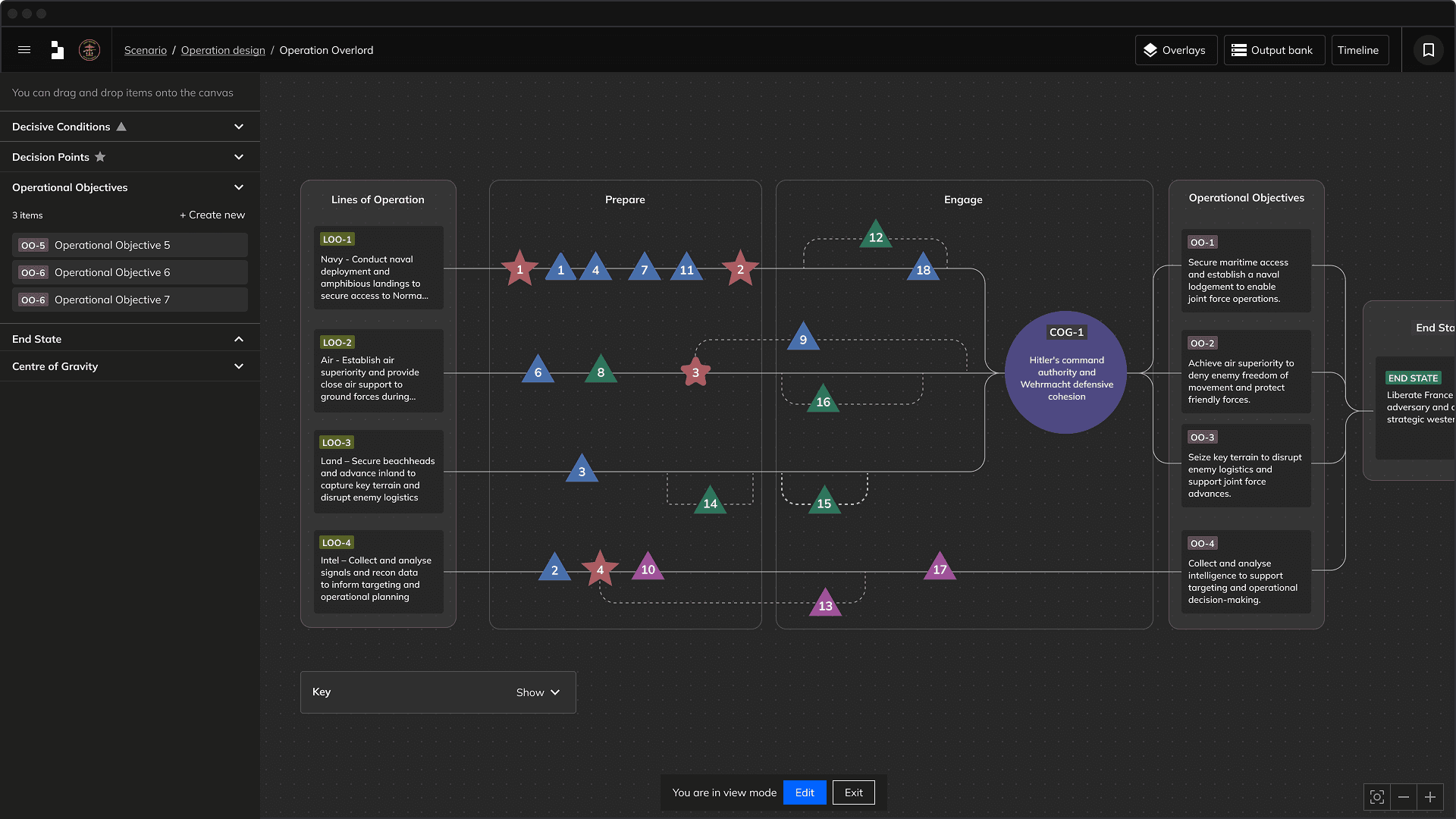
“This is going to save me hours in Microsoft Power Point” and the for the first time, we can see how every decision is connected back to the commander’s intent.”
design
Extending capability to analysis and course of action planning
We created a wide range of planning capabilities across the platform. These two examples show how we made it easier for planners to understand their environment and turn that insight into co-ordinated action
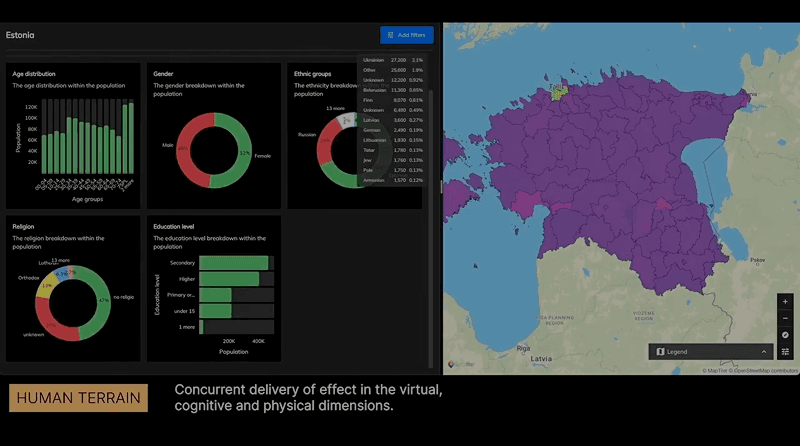
Human terrain analysis
We developed a human terrain module to help planners understand the people within the operating environment. It supports effects-based planning through an intuitive dashboard that visualises live demographic data, enabling audience segmentation, target group analysis, and more informed decision-making.
ArcGIS data integration
Ability to import ArcGIS data sets layers alongside live and static data feeds from open sources.
Adding NATO symbology icons to the map
Using NATO-standard symbols gives planners a clear, consistent view of friendly, neutral and adversary elements, improving situational awareness and accelerating decisions.
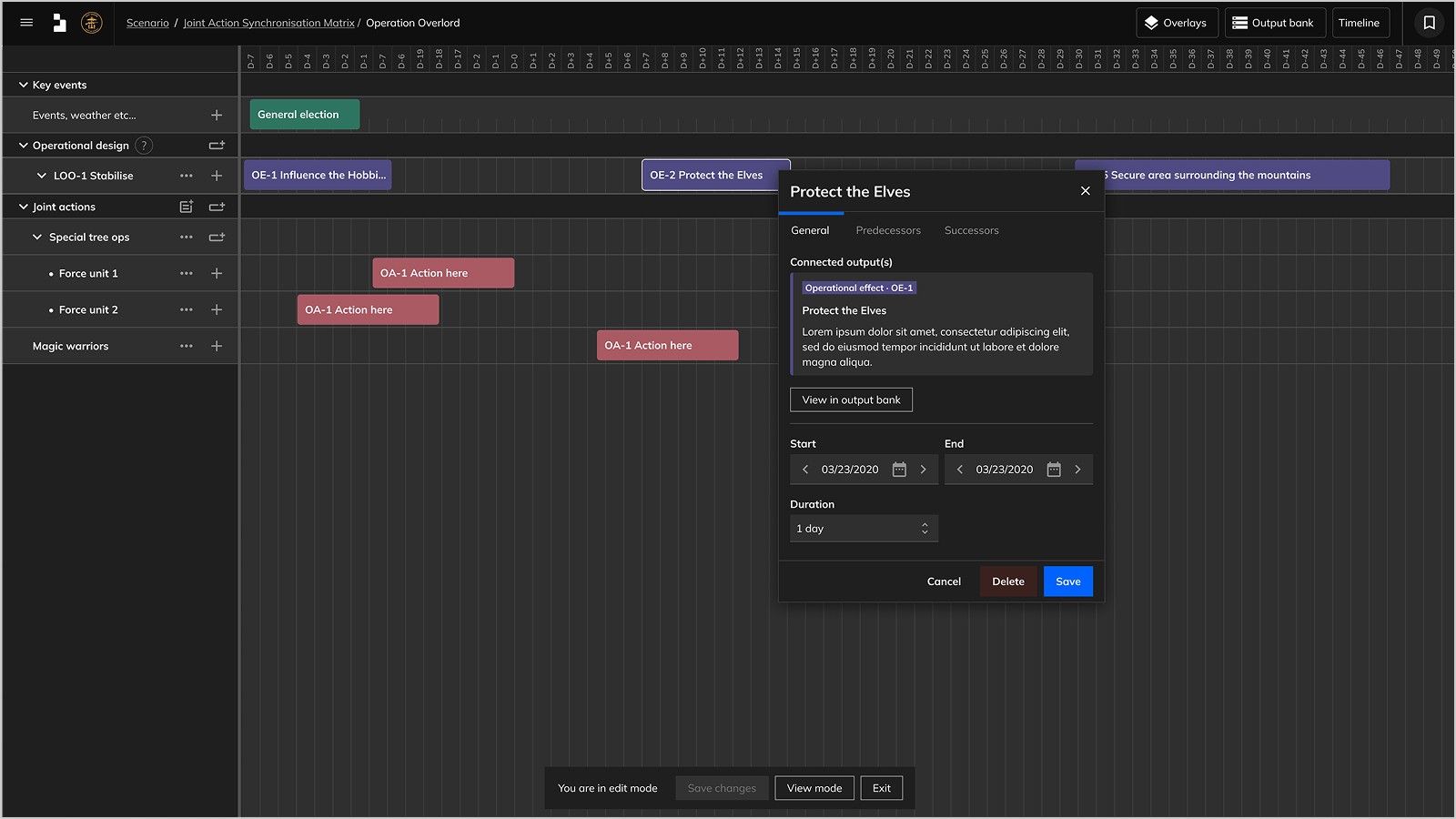
Joint Action Synchronisation Matrix
Following AJP-5 principles, we built a synchronisation matrix to coordinate activities and effects across time, space, and purpose. Flexibility was key, enabling users to track elements of joint action and adapt plans quickly.
outcome
Expanding the platform for NATO’s maritime exercise
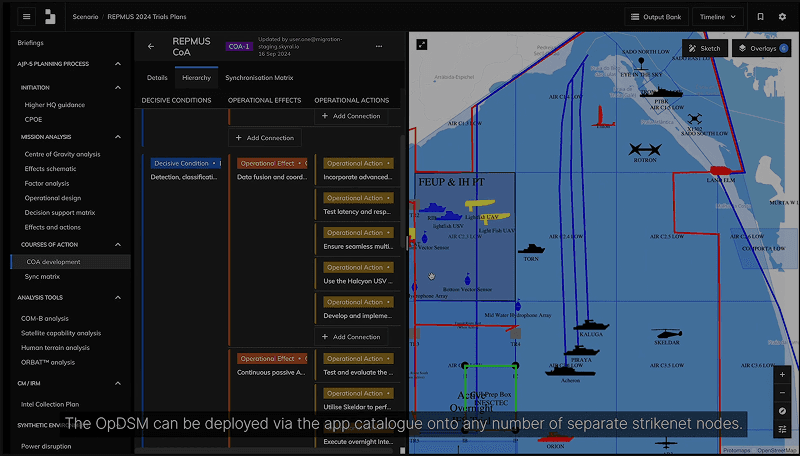
After building momentum with the OpDST, we adapted the platform for the maritime domain in partnership with Microsoft
This became the OpDSM, used by the Royal Navy and allied forces during NATO’s maritime exercise in Portugal, where partners tested next-generation maritime capabilities in real conditions.
Evolved the platform for naval planners while maintaining the clarity and usability of OpDST
Introduced maritime-specific visual components and live data integration
Validated usability on site with operators during REPMUS
Enabled planners to coordinate missions and prove the platform’s scalability to multi-domain operations
REFLECTIONS AND LEARNINGS
Recognising the impact design can have in Defence
What I learned
Working in defence is unlike B2C SaaS, with small user groups, strict access, and complex procurement. I learned that if it isn’t usable, it won’t be used. Balancing feasibility and user needs is essential because engineering alone doesn’t guarantee adoption.
Perfection is the enemy of progress. Value and momentum matter more than pixel precision. Quality assurance still matters; align on “good enough,” ship, and iterate. I’d also invest earlier in a stronger design system to improve speed and consistency.
There’s huge potential ahead, and AI is already transforming digital course-of-action planning, with companies like Command.ai and OneBrief leading the way. Most of all, this project showed me the impact effective design can have in national defence.